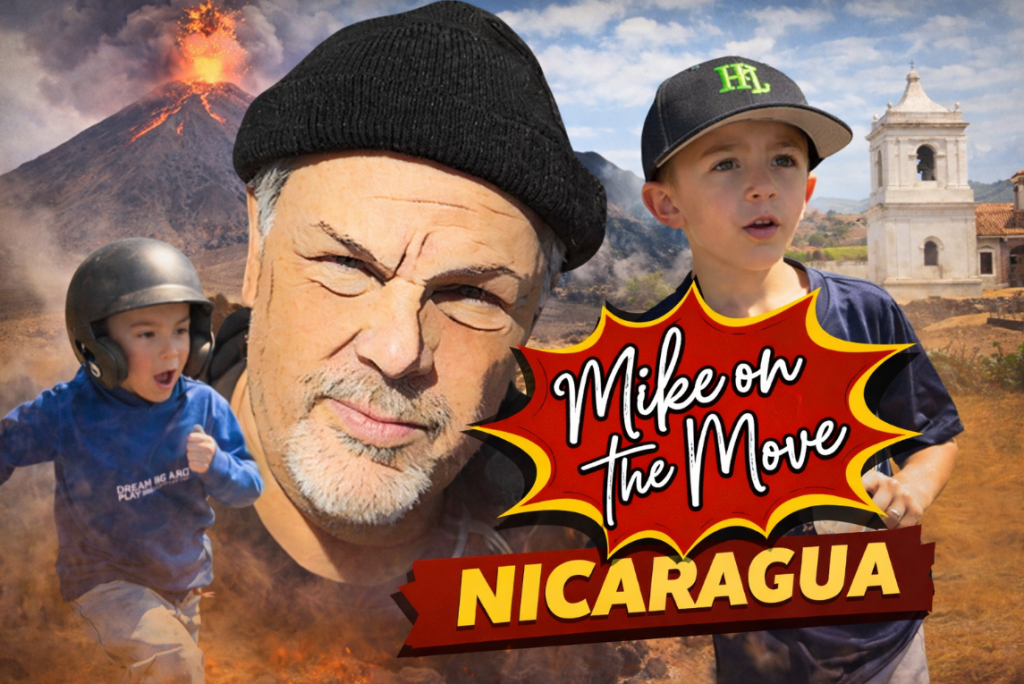
Some trips begin quietly.
Others begin with jet engines and the promise of volcanoes glowing in the dark.
This one was definitely the latter.
Rileigh and I pointed ourselves south toward Nicaragua with a loose plan and a lot of curiosity. The rough outline was simple: land in Managua, make our way to León, explore the city, climb a volcano, eat everything we could find, and let the country reveal itself along the way.
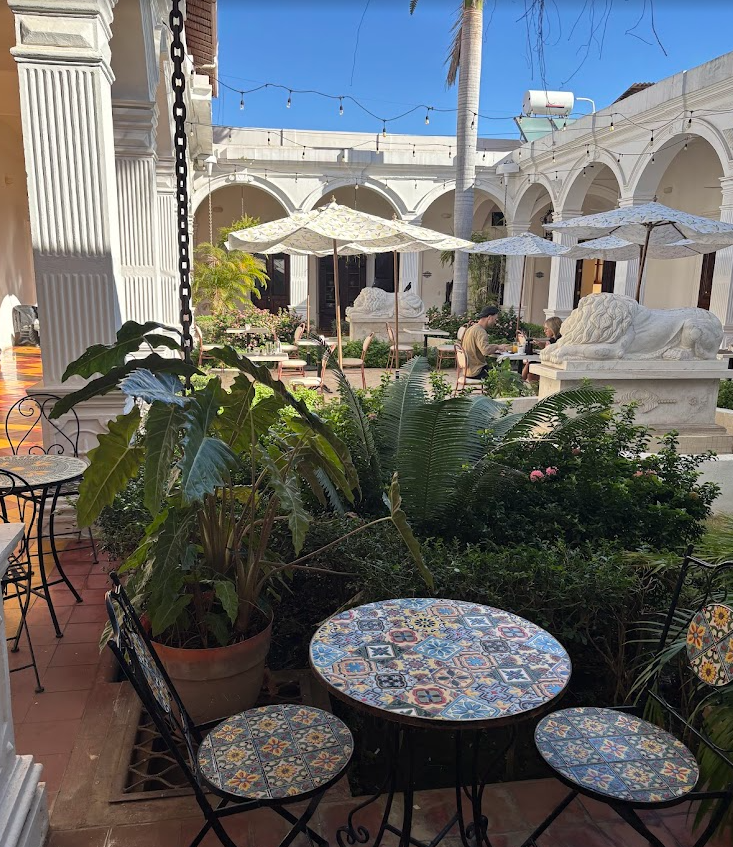
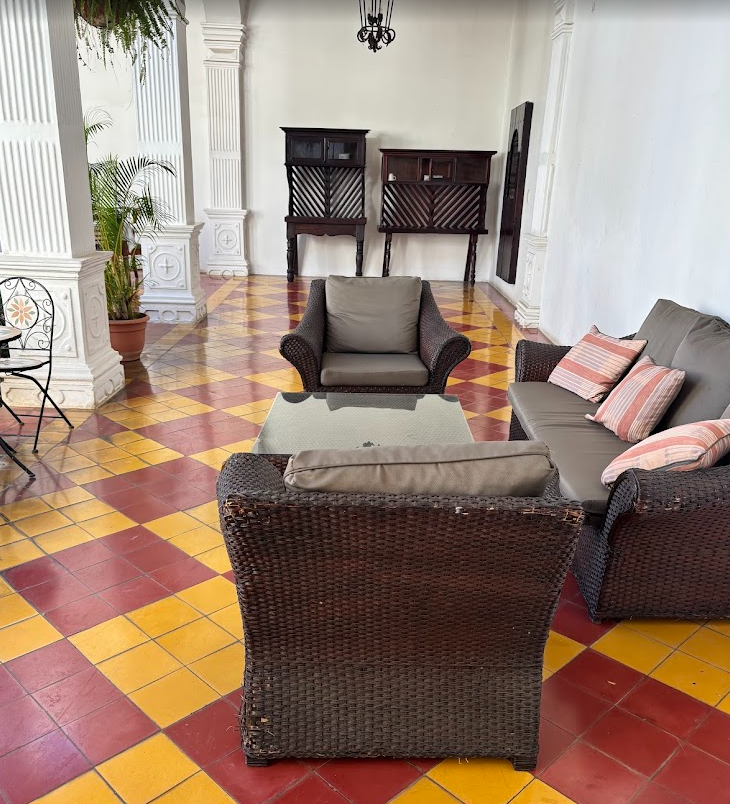
Like most good trips, it was part planning and part improvisation. By the time we reached León, we were more than ready to drop our bags and breathe for a minute. Our base for the trip was Hotel La Perla, a beautiful historic hotel sitting right in the heart of the city. The building has that classic colonial character—high ceilings, thick walls, and a peaceful interior courtyard that feels like a small refuge from the heat and bustle outside.
The staff welcomed us like old friends, and after a long travel day that kind of hospitality goes a long way. The restaurant stays open late, the courtyard offers a quiet place to unwind, and stepping out the front door puts you directly into the rhythm of León’s streets. It turned out to be the perfect home base for exploring the city.
Before the adventure officially started, I had a small side mission. A friend back in Virginia couldn’t make the trip, so I met his brother at the airport to deliver an iPhone for his son.
It was a quick exchange—handshake, smile, mission accomplished. There’s something oddly satisfying about being the courier of small happiness in a foreign airport. Sometimes travel is about big experiences. Sometimes it’s just about moments like that.
Managua itself leaves a strong first impression. It isn’t polished or curated for tourists. Poverty is visible. Buildings stand beside empty lots where earthquakes once reshaped the city. Vendors weave through traffic selling fruit, drinks, and whatever the day demands.
The city doesn’t try to hide what it is. And that honesty is part of its character.
From Managua we drove about forty-five minutes toward León, though it felt like stepping back several decades. The countryside opened into wide green fields. Volcanoes rose in the distance like sleeping giants. Lakes flashed silver under the sun. And every few miles we slowed behind something you rarely see back home anymore: Donkey carts. Horse-drawn wagons. Farmers traveling at the pace their animals preferred.
Cars simply waited until the road opened up again. No honking. No frustration. Just patience. It felt like Nicaragua leaning over and whispering: Slow down, amigo.
León is a university town, but it’s far from polished. It’s energetic, colorful, and full of life. Street vendors line the sidewalks. Music drifts from open doors. Courtyards hide behind tall wooden gates. Murals and memorials tell stories of revolution that still feel close to the surface.
Dinner our first night was simple and excellent. Afterward we wandered through the market streets where the night really begins once the sun finally backs off. Street corn vendors worked their magic while musicians played on corners and families filled the outdoor tables. For a moment I considered sitting down with one of the guitar players and joining in. But Nicaragua deserves your attention before you try to harmonize with it.
Running on very little sleep, I eventually surrendered to an early night. Tomorrow would bring a guided walking tour through León’s churches and history, followed by a food tour through the city. If day one was the overture, day two would be the first full movement.
The morning started with strong coffee, fresh tropical fruit, and the quiet hum of ceiling fans pushing around the early heat. Then we stepped into León’s history. Nicaragua’s political story isn’t tucked away in museums. It’s painted on walls and remembered in everyday conversation. The unrest of the 2018 protests isn’t distant history here—it still feels recent.
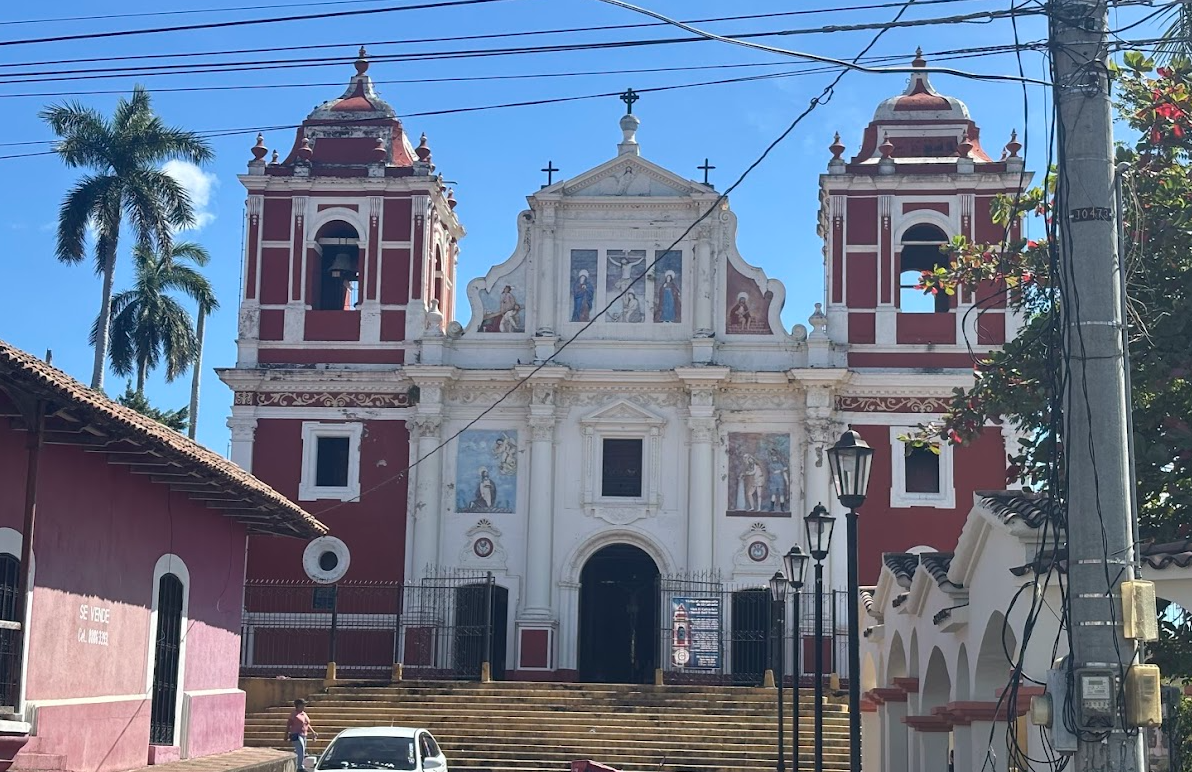
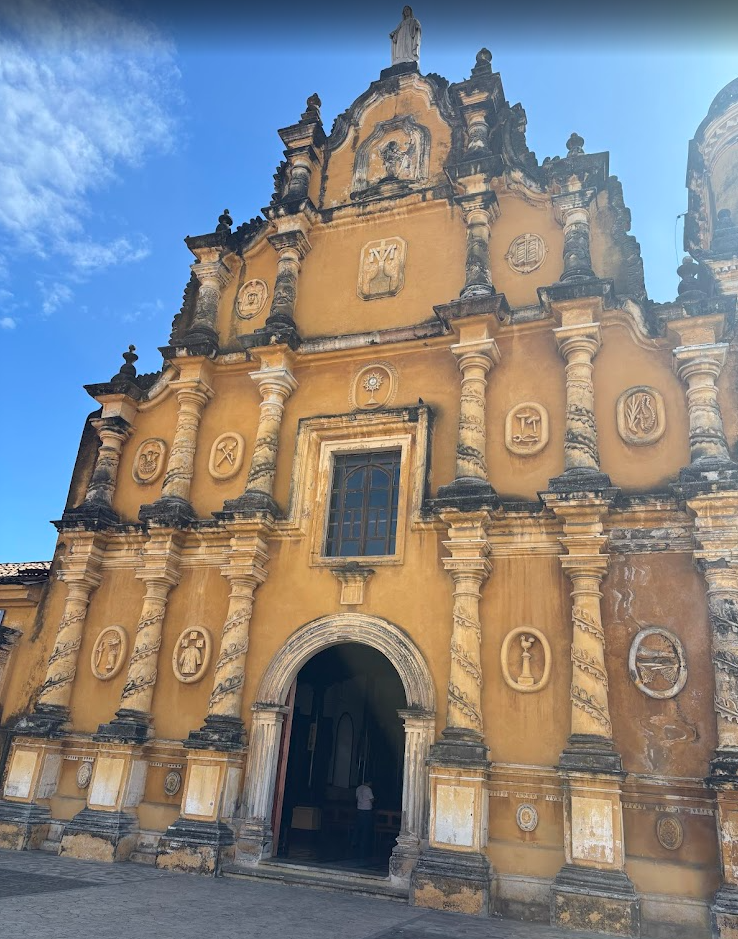
Our guide walked us through the city’s layered past: Indigenous roots, Spanish conquest, independence, revolutions, and the complicated political landscape of the present.
History here isn’t behind glass. It’s spray-painted on stucco. Yet León still feels vibrant. University students fill the streets. Vendors laugh loudly. Music spills from courtyards. The city carries both weight and warmth at the same time.
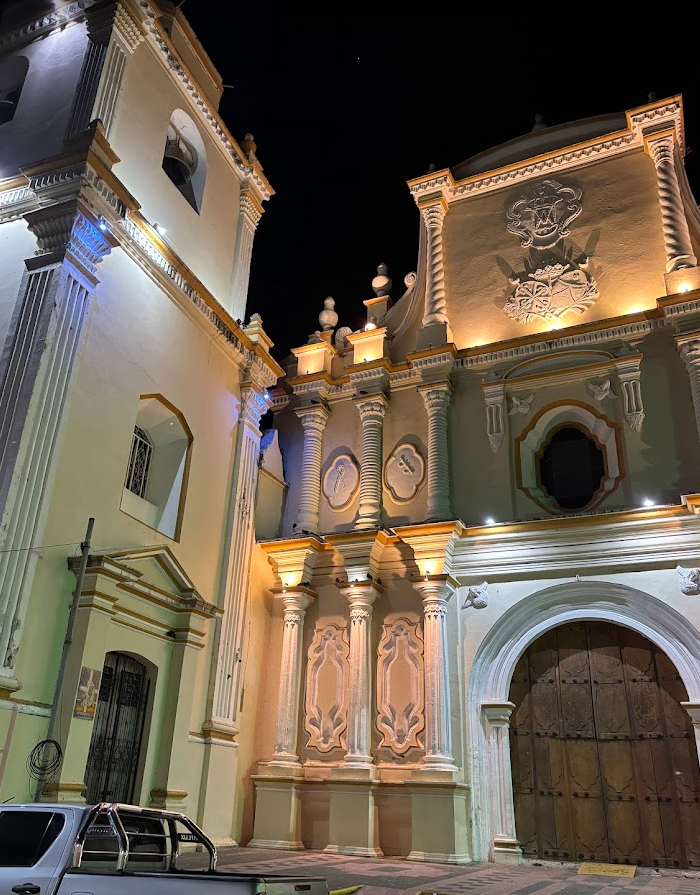
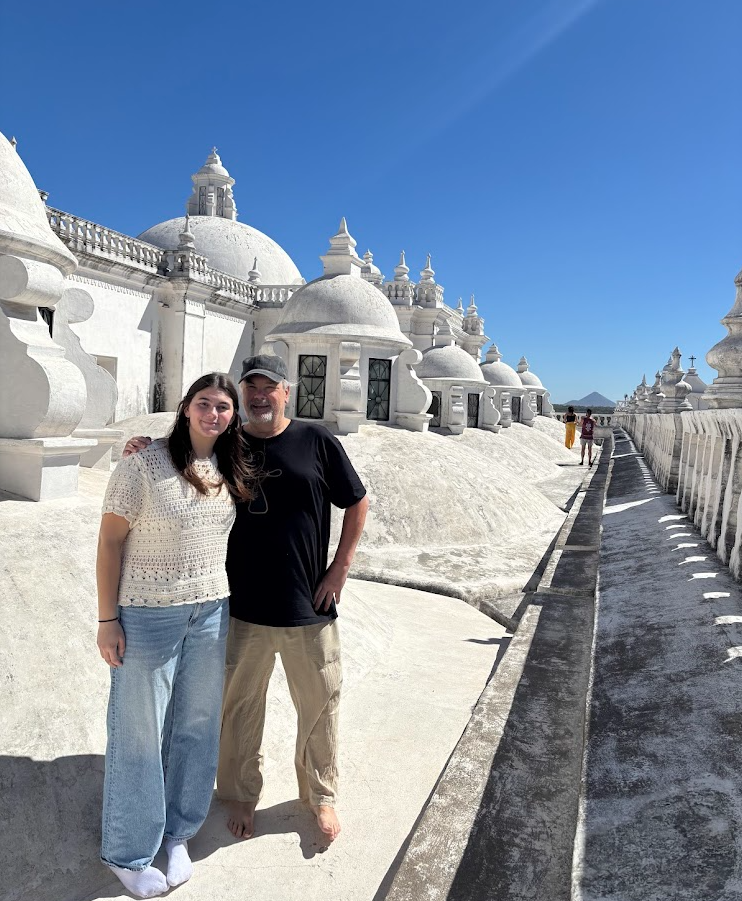
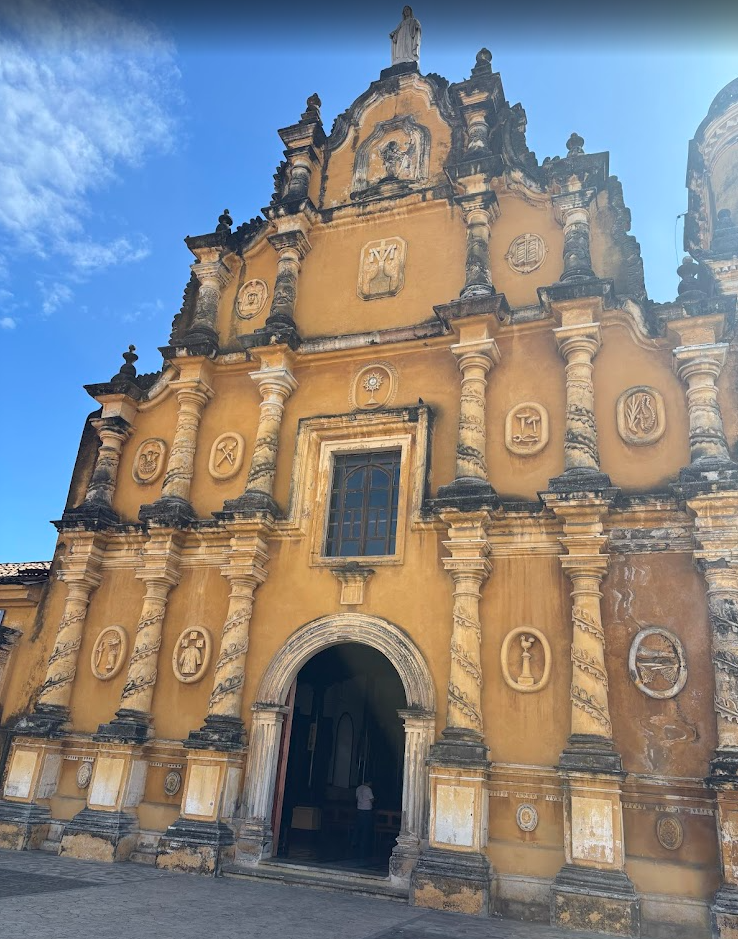
One of the highlights of the day was visiting León’s cathedral, the spiritual heart of a city proudly known as “the city of churches.” Nearly sixteen major churches rise across the skyline, their sun-bleached facades standing firm against the heat and time.
Inside the cathedral, the air cools and the light softens. It’s one of those places where centuries seem to settle quietly around you. But León’s story isn’t just written in stone. It’s also written in fire.
The region is surrounded by volcanoes—six or seven nearby, many of them still active. The earth here doesn’t rest politely. Soon we would see that up close.
Cerro Negro humbled me. I hike a lot and spent years doing worse in the Army, so climbing usually isn’t an issue. But volcanic ash is a different beast entirely. Every step forward slides half a step back. Add the board strapped to your back, the sun overhead, and wind throwing ash in your face, and suddenly the climb becomes a negotiation with gravity.
Rileigh pushed ahead while we climbed with a Dutch couple who looked suspiciously comfortable with the whole situation. There was no way I was quitting halfway up a volcano in front of international witnesses.
So I kept climbing. One slow step at a time.
Eventually we reached the top. The landscape stretched out in every direction—raw, volcanic, and alive.Then came the fun part. Volcano boarding.
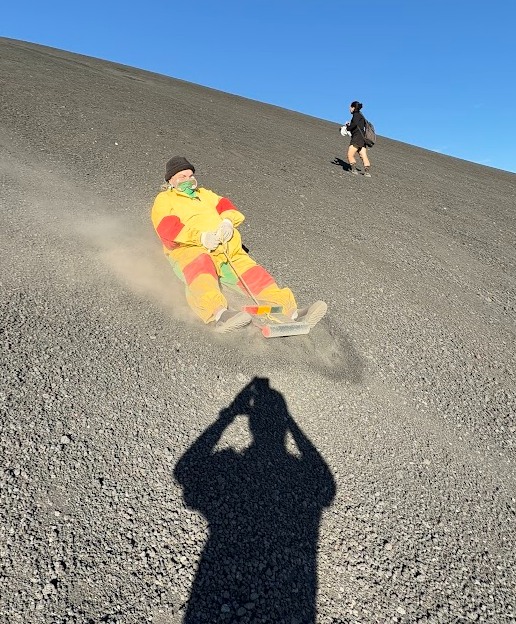
Forty-five degrees of black ash straight downhill. You sit on a wooden board, lean back, and surrender to gravity. The first few seconds feel like you’ve made a terrible decision. Then suddenly you’re flying. Ash sprays behind you. Wind roars past your ears. It’s half laughter and half survival instinct. By the time I reached the bottom I was covered in soot and grinning like a kid.
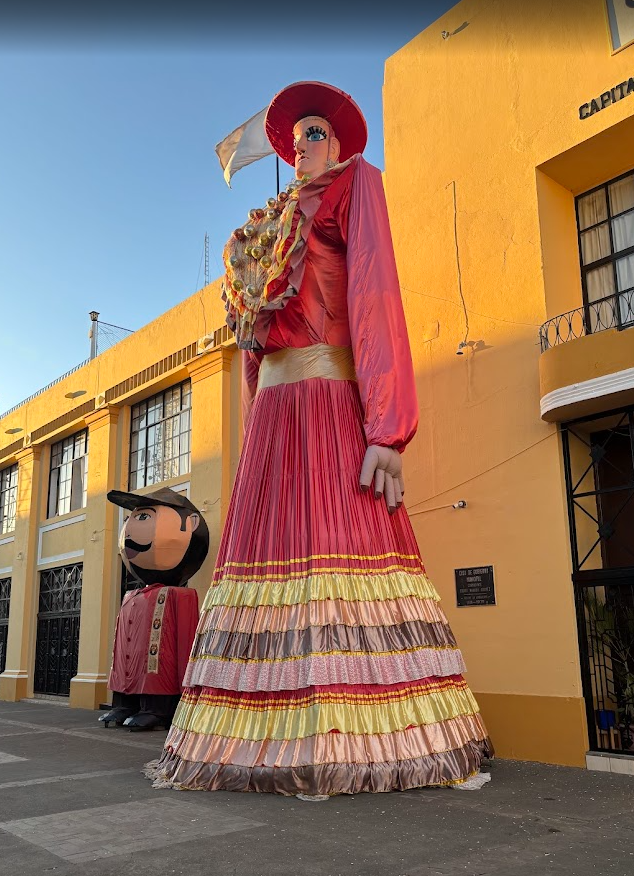
The next day we slowed the pace a little. Instead of the cooking class we had planned, we spent more time exploring León in daylight. The markets were busy, the shops were open, and artisans were selling handmade goods that felt personal rather than mass-produced.
Later we drove about an hour to the Pacific coast. The road winds through small towns before finally opening to the ocean. We ended up eating pizza while watching the sun sink into the Pacific like it was clocking out for the evening. After the heat and ash of the volcano, the ocean felt like a reset.
Our final volcanic stop was Telica. Broader and older than Cerro Negro, Telica’s crater constantly exhales smoke as if the earth itself is breathing. Standing at the rim, you feel very small—and strangely grateful for that perspective. But Nicaragua is more than scenery.
The Sandinista government remains firmly in power, and political murals across León remind visitors that the country’s history is still shaping its present. Conversations sometimes pause carefully. Public speech carries weight.
It’s not paranoia. It’s simply part of the atmosphere. Travel isn’t only about landscapes. It’s about understanding the context people live in every day. Nicaragua carries beauty and complexity in equal measure.
Our final dinner in León felt well earned. Rileigh and I sat back, tired in the best possible way—the kind that only comes after long days of exploring and a few literal mountains climbed together. Another overseas chapter written. Another place that expanded our map.
Travel has a way of reminding you that the world is far bigger—and far more complicated—than the headlines we read about it. Nicaragua isn’t a place you simply check off a list. It’s a country you feel: in the heat rising from black volcanic sand, in the music echoing through León’s streets, and in the quiet conversations that tell stories just beneath the surface. Places like this don’t just give you memories—they shift your perspective a little. And in the end, that’s the real reason to keep moving

 Mike on the Move
Leave a comment